If 2025 was the year of “wait and see,” 2026 is shaping up to be “selective and strategic.”
Inflation is easing in many places, but not everywhere. Central banks are not moving in sync. And that matters because IT hiring is basically a downstream effect of two things:
- business confidence (will we grow?)
- cost of money (can we afford to fund that growth?)
Here’s how inflation and interest rates ripple through employment in IT jobs in 2026.
1) Inflation changes what companies prioritize
When inflation is high, companies get squeezed from both ends:
- costs rise (wages, cloud bills, vendors, rent, energy)
- customers become price sensitive and delay purchases
That combination usually pushes leadership into “protect margin” mode:
- freeze hiring
- cut experimental projects
- focus on projects that clearly reduce cost or increase revenue within 6 to 12 months
In parts of Europe, inflation data has been cooling into late 2025, which supports the view that broad price pressures have eased, though risks remain. (Reuters)
Globally, the IMF’s October 2025 World Economic Outlook projected growth slowing into 2026 and noted inflation continuing to decline overall, but with meaningful variation by country. (IMF)
What that means for IT jobs in 2026: fewer “nice to have” roles, more “prove it” roles.
2) Interest rates decide whether growth projects live or die
Interest rates are the price of capital. When rates are high:
- borrowing is expensive
- venture funding is more selective
- IPO and M&A timelines stretch
- CFOs demand faster payback
Even if inflation is falling, many policymakers keep rates tighter until they’re confident inflation is down for good. The OECD explicitly frames this as keeping a tight stance until inflation declines durably, even while expecting room for rate reductions in 2026 and 2027. (OECD)
What that means for IT jobs in 2026: hiring doesn’t rebound just because inflation prints look better. It rebounds when funding and internal budgets loosen.
3) The venture and startup hiring channel: rates hit hardest here
Startups are the most rate sensitive part of the IT job market.
- Higher rates usually mean fewer mega-rounds and more down-round caution.
- Lower rates generally improve exit conditions, which improves willingness to hire.
Yet capital is not simply “on/off.” In 2025, global VC investment showed strength and a strong tilt toward AI, with mega-rounds concentrated in a few winners. (KPMG)
For 2026, institutional investors are explicitly calling out rates as a driver of M&A activity and broader venture conditions. (Wellington)
Practical takeaway: in 2026, “startup hiring” is likely to be more barbelled:
- hot: AI infrastructure, cybersecurity, data engineering, applied AI in real business workflows
- cold: undifferentiated apps, “pilot purgatory,” unclear monetization
4) The enterprise hiring channel: slower, but steadier
Big companies do not hire like startups. Even in cautious environments, they still need IT to:
- keep systems running
- improve security
- modernize legacy stacks
- comply with regulations
- automate workflows
But they still react to macro pressure. For example, CompTIA’s analysis of U.S. labor data described a drag on tech hiring and showed job postings down month over month, even while software development remained the largest posting category. (CompTIA)
Also important: “tech jobs” are not only in tech companies. CompTIA separates tech company employment from “tech occupation employment” across all industries, which helps explain why the picture can look mixed. (CompTIA)
Practical takeaway: if you want stability in 2026, aim at tech roles inside non-tech industries (finance, healthcare, logistics, government, education) where budgets are less dependent on VC cycles.
5) 2026’s twist: AI can both create demand and re-ignite inflation risk
AI is a hiring driver, but it’s also a cost driver.
A recent Reuters piece flagged investor concern that AI infrastructure spending (data centers, energy, chips) could add inflation pressure and complicate rate cuts. (Reuters)
If inflation re-accelerates, central banks may pause cuts or even tighten again, which would typically cool hiring, especially in speculative tech.
So 2026 can split into two paths:
- Soft landing path: inflation cools, rates drift down, hiring improves gradually (especially late 2026)
- Sticky inflation path: rates stay higher for longer, hiring remains selective, more restructuring
6) What this means for IT job seekers in 2026
If you want to be “macro-proof,” position yourself where budgets survive in both paths.
Skills that match 2026 spending behavior
- Cost cutters: cloud cost optimization (FinOps), observability, performance engineering
- Risk reducers: security engineering, IAM, GRC, secure SDLC
- Revenue enablers: data engineering, analytics engineering, experimentation platforms
- AI applied work: not “prompting,” but integrating AI into products and internal workflows with measurable outcomes
CompTIA noted a large share of postings tied to AI skills, a signal that “AI literacy + core engineering” is becoming baseline rather than niche. (CompTIA)
How to job hunt when rates are still a headwind
- Target teams with clear budgets: security, platforms, reliability, core product
- In interviews, lead with business outcomes: cost saved, incidents reduced, time-to-ship improved
- Build a portfolio that shows you can ship in constraints (because 2026 is about constraints)
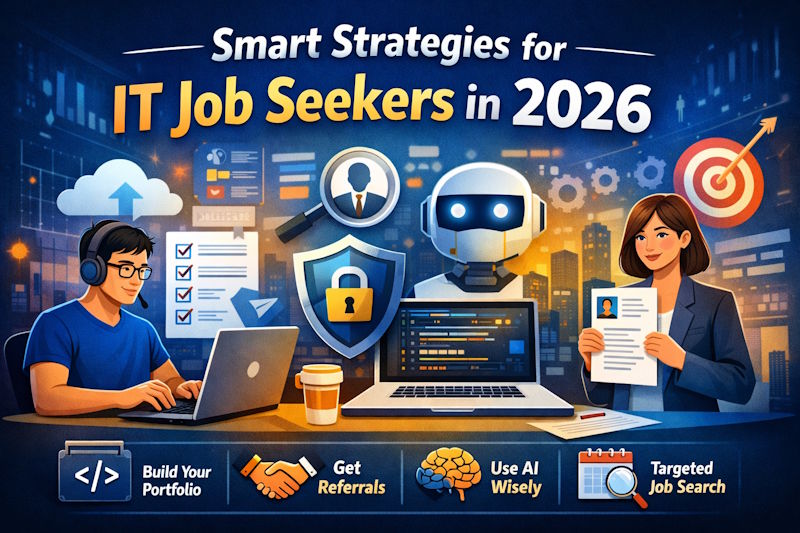
Here’s how IT job seekers can job hunt smarter in 2026, when hiring is selective and managers want proof, not potential.
1) Pick a narrow lane, then market it hard
Most candidates look generic. You want to look “obviously useful” for one type of team.
Good 2026 lanes (choose 1):
- Software engineer (backend, frontend, mobile)
- Cloud and platform (DevOps, SRE, platform engineering)
- Cybersecurity (SOC, IAM, AppSec, GRC)
- Data (data engineer, analytics engineer, BI)
- QA automation (modern test automation, CI/CD quality gates)
- Applied AI (shipping features with LLMs, RAG, evals, safety, cost control)
Your headline should read like: “Backend engineer who ships reliable APIs and reduces cloud cost” not “Software developer.”
2) Build “proof of work” that matches a real manager problem
Portfolios win when they feel like work output, not school projects.
Do 2 to 3 projects that show:
- a clear problem statement
- your decisions and tradeoffs
- production habits (tests, logging, CI, docs)
- measurable outcomes (speed, cost, reliability, conversion)
Examples:
- “Reduced API latency by 40% with caching and query optimization”
- “Built CI pipeline that cut bugs reaching staging by 30%”
- “Implemented IAM and audit logging for a multi-tenant app”
Ship it. Deploy it. Write a short case study.
3) Use AI as your assistant, not your identity
In 2026, many candidates can “use AI.” Few can use it responsibly.
Show you can:
- write better specs and acceptance criteria with AI
- generate tests, edge cases, and refactors
- review output critically and fix mistakes
- measure quality (benchmarks, evals, monitoring)
- manage cost and latency
In interviews, talk about how you validate AI output, not how fast it types.
4) Target roles where budgets are steadier
Smarter targeting beats more applications.
Higher hit-rate areas:
- security, platform, reliability, internal tools
- regulated industries: finance, healthcare, government, logistics
- teams with clear KPIs: uptime, cost, compliance, delivery speed
Avoid “vague innovation” teams unless you already have strong proof.
5) Run a weekly pipeline like a sales funnel
Job search is a numbers game, but with quality control.
Weekly cadence:
- 20 to 30 targeted applications (not 200 random)
- 10 to 15 recruiter or hiring manager outreach messages
- 3 to 5 informational chats
- 2 referrals requested (after you do your homework)
Track it like a CRM: role, contact, status, next action.
6) Optimize for interviews the way you optimize software
Most people “practice.” You should iterate.
Core loops:
- one system design story (scope, tradeoffs, risks)
- 6 to 8 STAR stories (conflict, ownership, failure, impact)
- role-specific drills (LeetCode only if your target companies require it)
- a 30-60-90 plan for the role you want
Always end with impact: “What changed because of me?”
7) Be referral-first, not application-first
In 2026, a warm intro can be worth 50 cold applications.
Simple approach:
- find 20 companies you genuinely want
- connect with 1 to 2 employees per company
- ask for advice, not a job
- share your proof of work link
- request referral only after a short conversation
8) Package yourself like a product
Make it easy to say yes.
Minimum kit:
- 1-page resume tuned to the role
- LinkedIn that matches your lane
- portfolio with 2 to 3 case studies
- GitHub pinned repos with clean README
- short intro message that states your value in one line
At Industry Connect, everything above has been taken care for you. Learn more below.
What is Industry Connect?
Industry Connect is an IT/Software Career Launchpad that has everything you need
to kick-start your IT/software career in AU, NZ, UK, IE, SG, HK, IN, ID, VN & PH.
We have been helping career changers, recent IT graduates and people with a career gap
to start their IT/software careers.
Over the years, we have helped hundreds kick-start an IT/software career.
(Verifiable evidences are available on this website)
OUR CORE
We are an innovative software training school backed by global/local software companies.
Our ecosystem is an incubation process that supports our participants until they launch
a tech career.
OUR PROGRAMMES
Our Job-Ready training programmes focus on:
- Software Development
- Business Intelligence (or Data Analyst)
- Test Analyst
PROGRAMME STRUCTURE
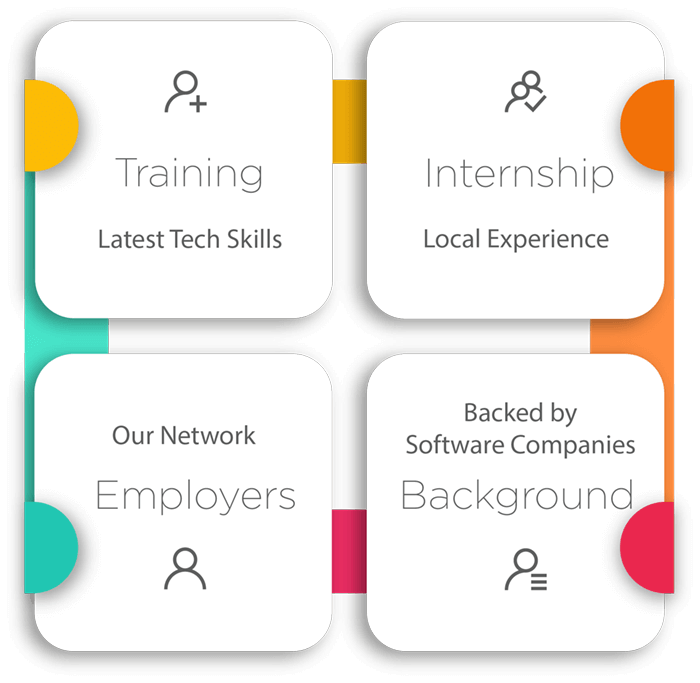
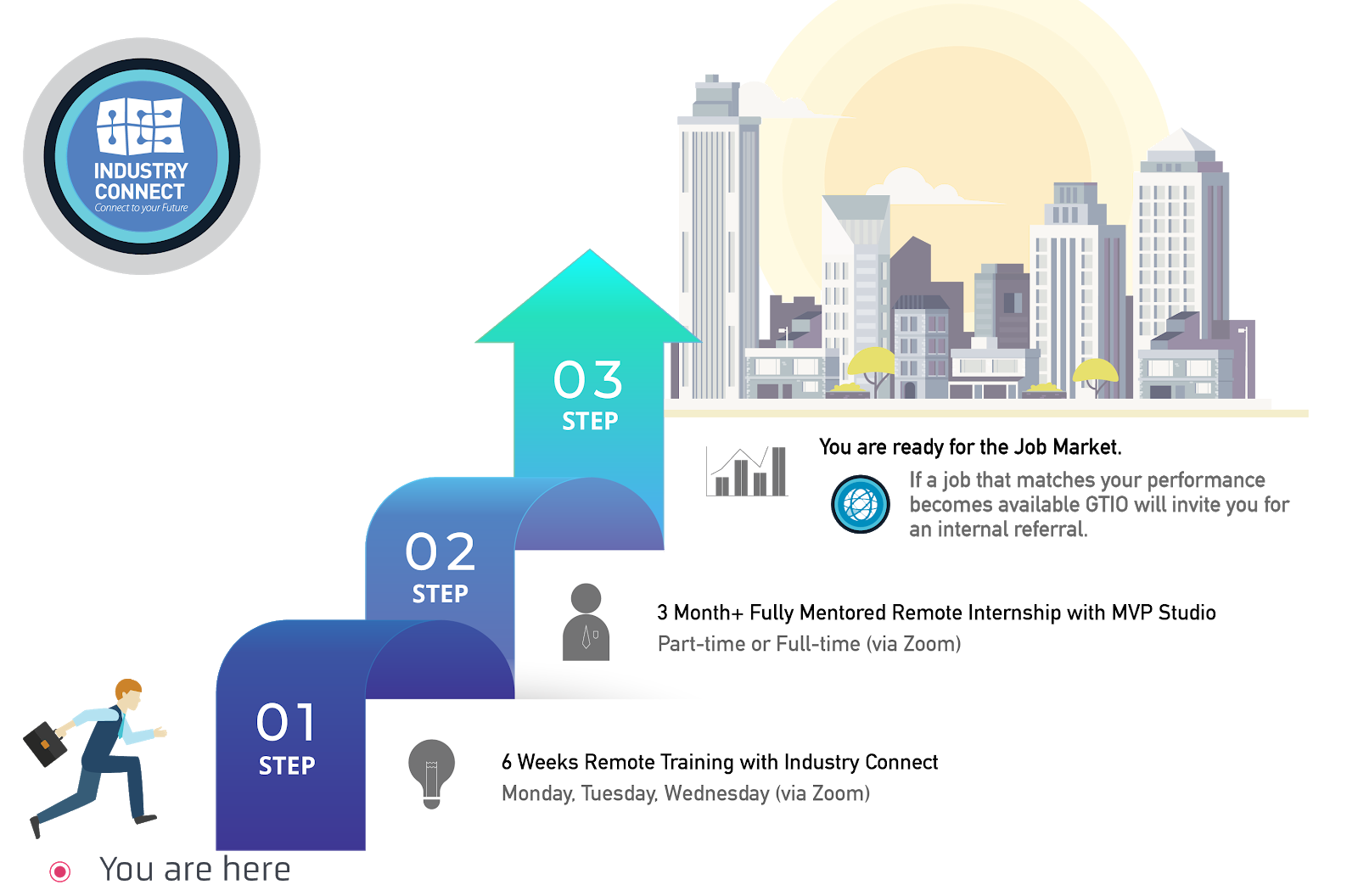
- Six Weeks Training Classes (Practical Tech Skills)
- Three Months (or more) Structured Internship on Large Commercial-Scale Projects (flexible hours)
- Employer Network (job analysis and internal referral if goals are met)
You can join us via Zoom (live face-to-face meeting) remotely from anywhere and
“download” the valuable knowledge & experiences from our tech experts across
different tech centres.
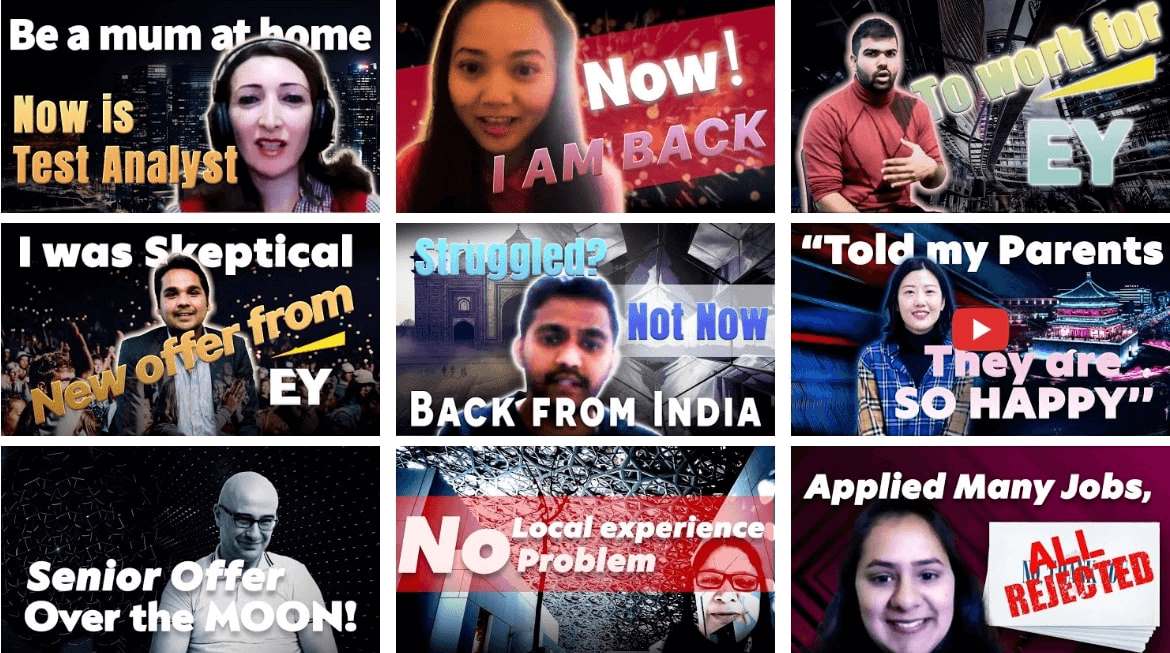
Watch 300+ Stories of Career Starters in IT/Software
- Career Changers & Switch to IT
- Recent Graduates
- People with a Career Gap
- New Software Developers
- New BI or Data Analysts
- New Test Analysts
Click the image to watch those who changed their careers to IT, had gap years and recent IT graduates.

Recent Posts
AU, NZ, SG, UK, IE, CA